
Identify the configuration
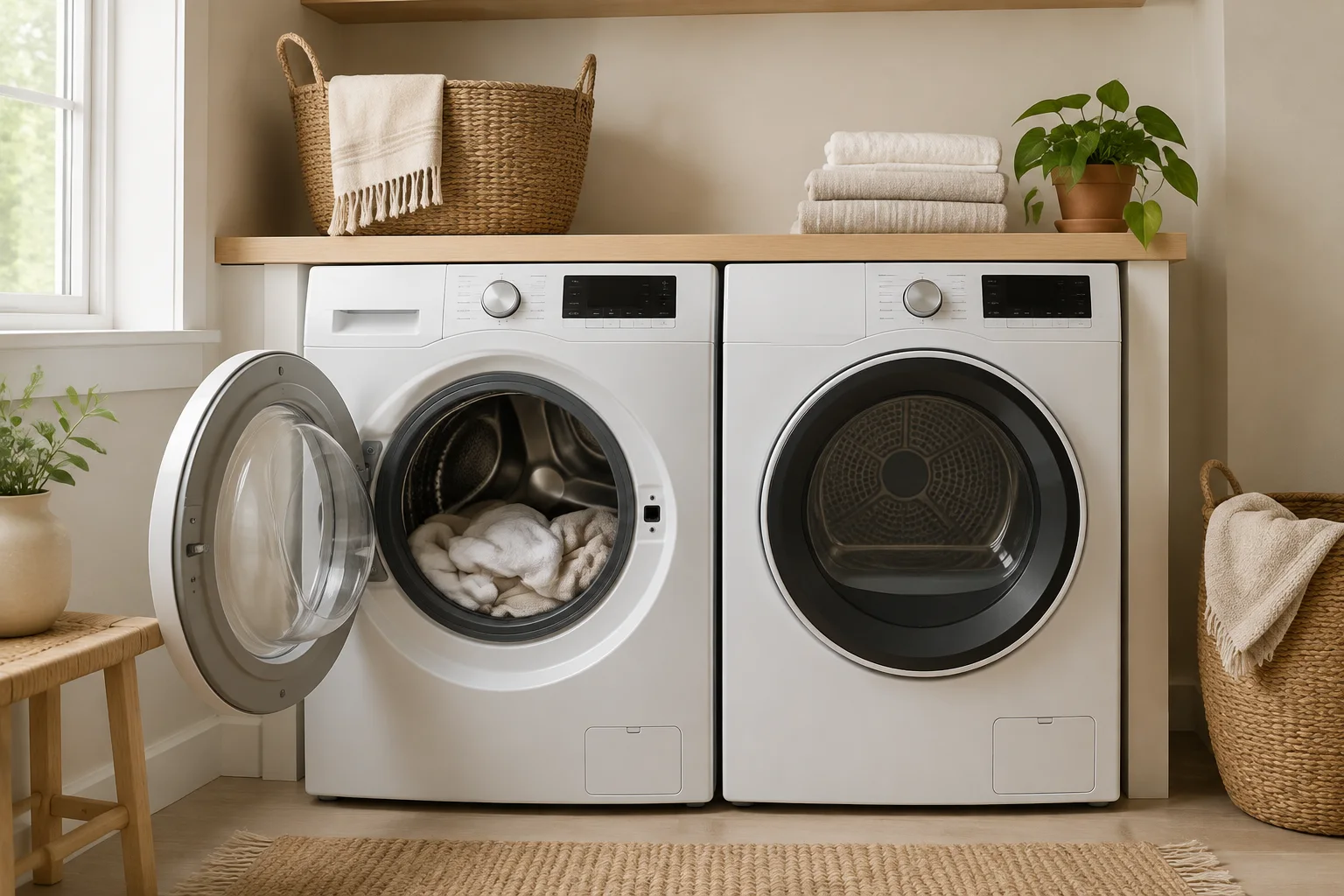
A one-piece laundry centre differs from separately stacked machines. Photograph the full installation and model label.
Repair by appliance
One half of your laundry centre stopped working? Tell ABC whether the problem affects washing, drying or both, and have the model number ready if available.
What is it doing?
A technician checks the appliance to find the cause before recommending a repair.
Before a visit
You can call without trying these checks. If you choose to check anything, follow your owner's manual. Do not remove fixed panels, disconnect plumbing or test electrical parts.
A one-piece laundry centre differs from separately stacked machines. Photograph the full installation and model label.
Tell us what still works on the washer and dryer sides, even if only one problem prompted the call.
Compact installations may be heavy and connected to multiple utilities. Leave access planning to the service team.
If the problem continues after the checks in your owner's manual, stop testing and call with what you noticed. You do not need to identify a failed part.
Stop now
A compact laundry installation needs an assessment of both the faulty function and the space around it. A one-piece laundry centre, two separate stacked appliances and a single-drum washer-dryer are different products. Identifying which you own can prevent an unsuitable replacement purchase and make the repair estimate easier to understand.
A stacked pair consists of separate washer and dryer appliances installed together. A laundry centre combines the two functions in a coordinated vertical unit, while an all-in-one washes and dries in the same drum. Whirlpool's comparison separates these configurations because their use and replacement options differ.
Send a photo showing the full installation and controls. For separate appliances, include both model labels if they are safely accessible. Do not assume that a fault in one half means the other half must be replaced, or that one half of every one-piece product can be exchanged for a separate new appliance.
The condition of the load when it leaves the washer is relevant to the drying complaint. If clothes have become unusually wet after washing, report that change alongside longer drying. Whirlpool notes that selected spin speed and excess suds can affect how much water is left in a washer load.
Describe what each half still does successfully: washing, draining, spinning, tumbling and heating. That helps define whether one appliance or both need assessment. Use only the manual's normal programme and loading advice. An unstable stack, leaking water or unusual heat is a reason to stop, not to run another comparison load.
A technician needs to know how the appliance can be reached without damaging the installation. Describe doors, shelving, a countertop above the controls, a narrow passage and any inaccessible water shutoff or vent connection. A photograph from the doorway can show constraints that a close-up of the fault cannot.
Clear loose stored items from the working area, but leave lifting, unstacking and moving connected appliances to the appropriate people. Ask whether additional help or preparation is needed and whether that affects the estimate. For a rental or strata property, coordinate access to any building-controlled services before the visit.
Possibly, but compatibility must be established before buying. LG states that stackable models need a compatible pairing and the specified stacking kit. Similar width, matching colour or the same brand name is not sufficient evidence that two appliances can safely be stacked together.
Compare the diagnosed repair with a replacement arrangement that is approved for the remaining appliance and fits the closet. Include delivery, removal and any connection changes. ABC stocks parts and can order others; ask about the specific part and access work before deciding. A new gas connection or fuel conversion needs its own scope confirmation.
Understanding the repair
Washer supply, drain, dryer vent and electrical or gas connections occupy one compact area.
Closet depth, doors, shelving and adjacent cabinetry affect safe service access.
One-piece and some integrated systems can share control or power paths across both functions.
Service areas
ABC serves the communities below. Call with your full address and model to check your repair and appointment availability.
Common questions
No. Send a photograph of the installation and describe the surrounding access; the service team can advise what is needed.
Describe the exact configuration and model. Diagnosis can focus on one function while still considering shared controls and utilities.
Include closet width, doors and shelving in photos. Access should be planned before a heavy or connected system is moved.
Check the exact pairing and stacking-kit compatibility first. Keep both model numbers available and get the proposed combination confirmed by the manufacturer or installer. An appliance that fits the floor space may still be unsuitable for the existing stack.
Arrange your repair
Call ABC with your appliance, the problem and your community. Ask about appointment availability and any fees before booking.